Electricity network operator SP Energy Networks is helping to reduce flood risk and restore natural landscapes in the South of Scotland through a new peatland restoration project at the historic Buccleuch Estate in Dumfries & Galloway.
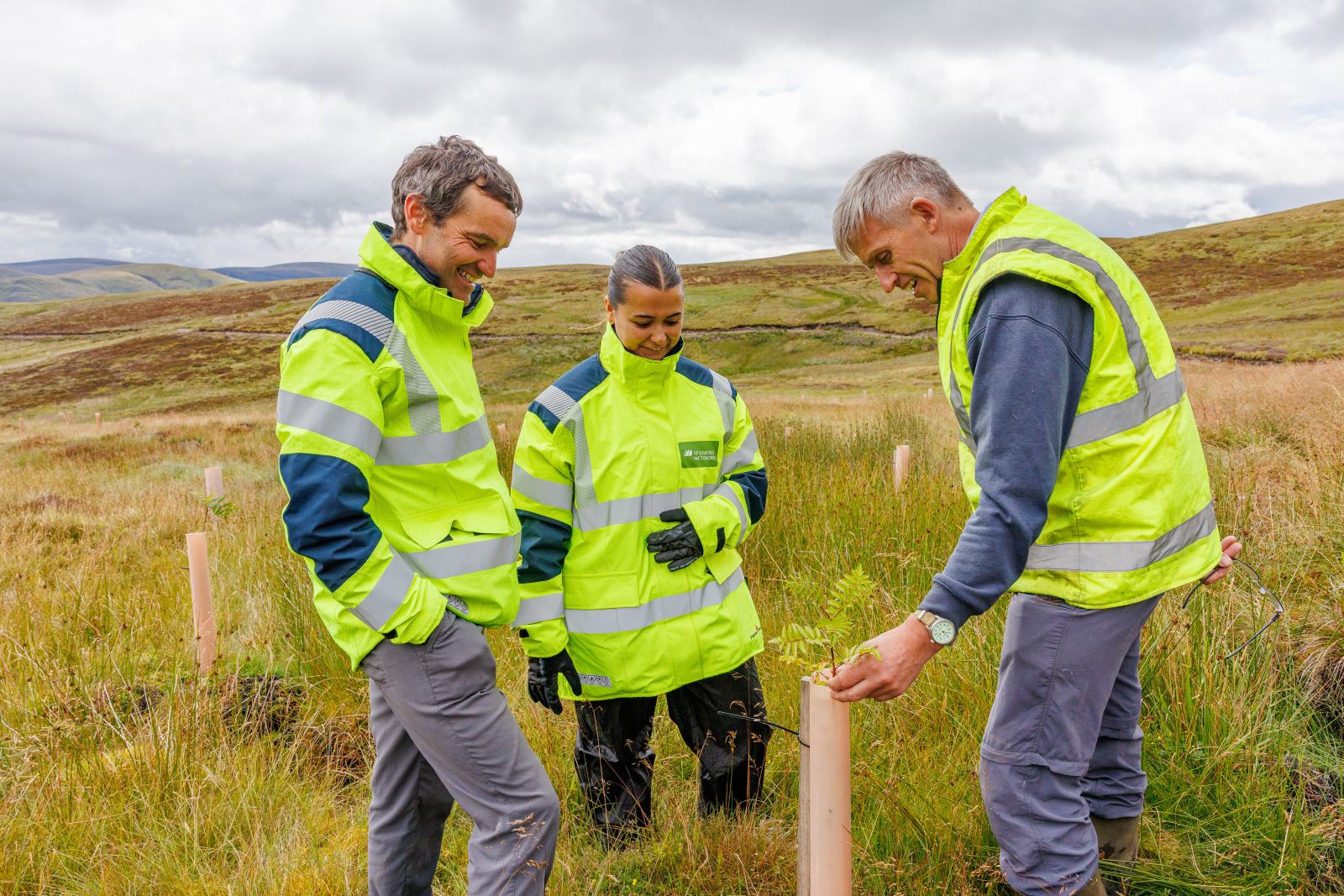
As part of its commitment to supporting local communities, wildlife and natural habitats, SP Energy Networks is supporting work to restore 46 hectares of degraded peatland within Buccleuch’s Queensberry Estate, located in the Lowther Hills near Drumlanrig Castle. The project will help slow the flow of water through the landscape and reduce local flood risk.
Covering an area roughly equivalent to more than 60 football pitches, this restoration work will also improve local water quality and keep rivers like the River Nith cleaner, benefiting its incredible wildlife and fisheries.
Historically, parts of the Estate’s upland area of peatland were in a degraded condition which enabled water to move more quickly downhill into surrounding valleys and rivers. In recent years, this has contributed to increased water flow affecting homes and businesses downstream.
The project will re-wet the land, helping the peat soak up and hold water again, like a sponge, in the upper parts of the landscape where water first collects. By slowing the flow of water downhill, the restoration will help reduce sudden surges, keep local streams more stable and lower the risk of flooding for nearby communities and wildlife. Surveys and restoration works at the site were carried out and managed by the Crichton Carbon Centre, whose expertise and involvement have been integral to the overall project.
Adrian Dolby, Head of Agriculture at Buccleuch, said: “This is an important area within the Queensberry Estate that has been significantly impacted by historic land management practices.
“By restoring the peatland, we are helping to reinstate its natural ability to hold water, reducing flooding and supporting the return of wildlife habitats. We’re proud to be working with SP Energy Networks on a project that delivers long-term benefits for both the environment and local communities.”
Healthy peatlands support a wide range of plants and wildlife. Restoring them also helps prevent the peat breaking down and being lost, and creates the right conditions for vegetation and upland species to thrive again
The project marks the first collaboration of its kind between SP Energy Networks and Buccleuch Estate, with further opportunities for nature restoration and biodiversity enhancement being explored.
Gill Renwick, SPT Sustainability Manager at SP Energy Networks, added: “Our communities are at the heart of everything we do and we’re committed to playing our part in supporting both climate resilience for those living and working nearby, and the protection of local wildlife.
“Projects like this show how restoring natural landscapes can help reduce flood risk and bring real benefits for local communities. We’re pleased to see the work is progressing well. This will help protect homes and businesses for generations to come.”
The restoration will involve carefully designed techniques to slow water flow and reprofile drainage channels, with all work carried out by specialist contractors using low-impact machinery suited to sensitive peatland environments.
The project is part of SP Energy Networks’ Action Plan for Nature, which aims to ensure its investment in infrastructure supports the protection and enhancement of the natural environment alongside delivering a reliable electricity network.