Three applications for consent have been submitted to the Scottish Ministers under Section 37 of the Electricity Act 1989 (as amended) and an application for planning permission has been submitted to the North Lanarkshire Council under the Town and Country Planning (Scotland) Act 1997 (as amended) for the Cumbernauld Substation Extension.
A statutory consultation is underway and you can submit your representation via www.energyconsents.scot, using the relevant Project Name and/or ECU reference number for the Section 37 applications.
| Application | ECU Reference |
|---|
| Proposed WB Route 400kV Overhead Line | ECU00006380 |
| Uprating of XX and XR Overhead Lines from 275kV to 400kV | ECU00006382 |
| Uprating of ZG Overhead Line from 275kV to 400kV | ECU00006375 |
For the application submitted to the North Lanarkshire Council under the Town and Country Planning (Scotland) Act 1997 (as amended) for the Cumbernauld Substation Extension, representation can be made on the Council’s planning portal - Simple Search.
Copies of all documents can be viewed and downloaded from the Project Documents page of this website.
The Denny to Wishaw Network Upgrade will allow more clean, green energy to get to homes and businesses in central Scotland and beyond.
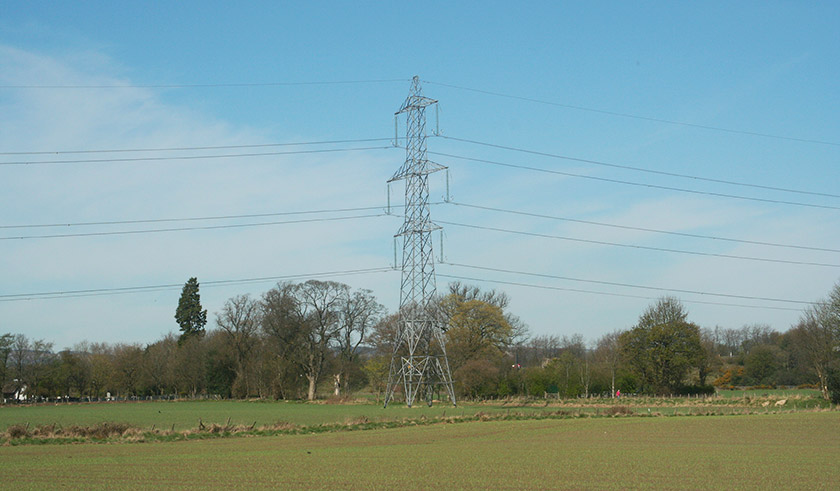
Above: A double-circuit 275kV overhead line
It will link up existing transmission lines and strengthen the high-voltage network, helping Scotland and the UK meet Net Zero climate change targets.
Investing in our network helps ensure that we can all benefit from the increase in renewable energy in Scotland, including offshore windfarms in the North Sea.
The Denny to Wishaw Network Upgrade will allow an additional 1,000MW (Megawatts) of green energy to flow through Scotland’s central belt.
Background: the energy challenge
The UK is committed to achieving Net Zero emissions of greenhouse gases by 2050, with a target of 40GW of electricity - enough to power every home in the UK - to come from offshore wind by 2030.
Scotland has taken a further step, setting a target date for Net Zero emissions by 2045 – meaning that Scotland’s contribution to climate change will end, definitively, in one generation.
At the same time, the UK Government forecasts that the use of green electricity will double by 2050, with the amount generated from UK offshore wind predicted to increase to 100GW from a projected 40GW in 2030.
We are in the middle of a transformation, with the electricity we use moving away from centralised generation towards multiple smaller-scale renewable sources, both on and off shore, which are geographically distributed.
This huge change means we need to upgrade the UK’s electricity transmission infrastructure, to accommodate the increasing amount of power flowing through the network from where it is produced to the homes, businesses, hospitals and public services that need it.